Launch of the Request for Proposals for the Collection and Delivery of Lightweight and Metal Packaging, as well as Glass Packaging, for 2028–2032
Below you will find the designated collection regions as well as all essential information regarding the bidding process, the schedule, and participation.
Lottery for the Collection Regions
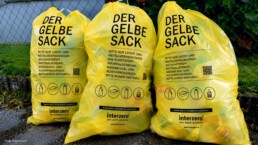
Under the direction of the responsible federal ministry (BMLUK), Interzero was randomly assigned a total of 13 political districts on June 8, 2026, in accordance with Section 29b(8) of the AWG, based on its market share. In these regions, Interzero will be responsible for organizing the collection of lightweight and metal packaging—and, in five political districts, glass packaging as well—from January 1, 2028, through December 31, 2032.
Interzero was assigned the districts of Eisenstadt-Umgebung, Wiener Neustadt-Stadt, Hollabrunn, Urfahr-Umgebung, and Murtal for the collection of lightweight and metal packaging as well as glass packaging. In addition, Interzero was assigned the districts of Mattersburg, Klagenfurt-Land, Villach-Land, Melk, Zwettl, Linz-Land, Hartberg-Fürstenfeld, and Innsbruck-Stadt for the collection of plastic and metal packaging.
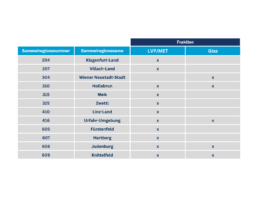
Since municipalities or municipal associations in some regions have exercised their right of entry as stipulated in the AWG, the collection of lightweight and metal packaging, as well as glass packaging, is being put out to bid in the following collection regions:
Bidding Process
The contract for packaging collection will be awarded through a negotiated procedure with prior publication in accordance with the principles of public procurement law. This does not result in the full application of the Public Procurement Act (BVergG) 2018; furthermore, the BVergG 2018 does not apply to this specific tender.
The solicitation will be conducted in accordance with the principles of free and fair competition, ensuring equal treatment of all applicants and bidders, and in compliance with the requirement of transparency. Contracts will be awarded to qualified, capable, and reliable companies at reasonable prices.
The process is divided into a participation phase (Stage 1) and a bidding phase (Stage 2) with an option for negotiation. Applications and bids will be evaluated according to the best-bidder principle. We will engage independent experts to verify and document compliance with the principles outlined above.
Schedule and Additional Information
The application period begins on September 7, 2026, and ends on October 18, 2026. The bid period is expected to begin in mid-November 2026.
The contract is expected to be awarded to the highest bidders, and the names of the highest bidders for each collection region and collection category are expected to be published in April 2027.
Further information can be found in the tender documents. The announcement and publication of the documents will take place on September 7, 2026, on the ANKÖ tender platform.
Free registration on the platform is required to view the tender documents and to submit a bid.
ANKÖ Tender Platform: https://www.vergabeportal.at
If you have any questions, please feel free to contact us:
Email: ausschreibung@interzero.at
Julian Hafner
Phone: +43 660 305 502 2
Sophie Danhel
Phone: +43 664 888 012 27
Latest News
External waste manager:
Creating legal certainty, reducing liability risks
International Battery Day:
Focus on fire risk from lithium batteries

Coral jewelry made from recycled material nominated for European award:
A project by Interzero and the designer Bojana Kovačič Zemljič
About Interzero:
Interzero is one of the leading service providers in the field of closing product, material, and logistics loops, as well as an innovation leader in plastics recycling with the largest sorting capacity in Europe. Guided by the principle of “zero waste solutions,” the company supports over 50,000 customers across Europe in the responsible management of recyclable materials, thereby helping them improve their own sustainability performance and conserve primary resources. With approximately 2,000 employees, the company generates revenue of over one billion euros (2021). According to Fraunhofer UMSICHT, Interzero’s recycling activities saved 1.2 million metric tons of greenhouse gases and 11.1 million metric tons of primary raw materials in 2023 alone, compared to primary production. As a pioneer in the circular economy, Interzero is the recipient of the 2024 German Sustainability Award as well as the associated special award in the “Resources” transformation category. For more information, visit www.interzero.at.
Find out more in our current brochure on ” resources SAVED by recycling “
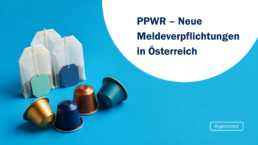
PPWR in Austria: New Reporting Requirements for Coffee Capsules, Pads, and Tea Bags
The Packaging and Packaging Waste Regulation, or PPWR for short, will be phased in across all EU member states starting August 12, 2026. Among the first relevant changes are restrictions on certain substances, specific PFAS limits for food packaging, and requirements for technical documentation and proof of compliance. Existing Austrian requirements regarding the collection, recycling, and reporting of Packaging generally remain applicable during the transition period, provided they are compatible with the PPWR.
For distributors and manufacturers of coffee and tea products, there is an additional relevant change in Austria: Certain single-serving units that are used and disposed of together with the product are now expressly covered by the European definition of packaging.
Coffee capsules, coffee pods, and tea bags are now considered packaging
The legal basis for the established definition of packaging can be found in Article 3(1) of Regulation (EU) 2025/40: This explicitly states that permeable coffee or tea bags, as well as certain single-serve units for coffee or tea systems, are considered Packaging if they are used with the product and disposed of together with it.
As of August 12, 2026, these include, in particular:
- Capsules for coffee and tea
- Coffee and teapads
- Bags for coffee and tea (including any paper labels/tags, strings, and clips)
This new classification has immediate practical implications. As soon as these products are classified as Packaging, they are subject to licensing and reporting requirements under the Austrian Packaging Ordinance and must therefore be included in the volume report.
New Reporting Requirements: Who Is Affected, and When Must Quantities Be Reported?
This applies to companies that place such pre-filled single-serving units on the market in Austria for the first time. These include, in particular:
- Austrian manufacturers and brand owners,
- bottlers and packagers,
- importers who bring filled products from abroad into Austria.
Exception: In principle, there is no obligation if the foreign supplier has already properly licensed the Packaging. For shipments from abroad, it is therefore essential to verify who is fulfilling the Austrian obligation. Proof of prior licensing should be provided through a legally binding declaration from the supplier.
Although the new packaging classification takes effect on August 12, 2026, the relevant packaging volumes for coffee and tea products do not need to be reported until October 1, 2026.
Depending on the volume and, consequently, the applicable reporting interval, this results in the following initial reports:
- Monthly filers: First time in the October 2026 filing
- Quarterly filers: First in the fourth quarter of 2026
- Annual filers: Starting with the 2026 annual report
Important: For the 2026 reporting year, the volumes for the entire calendar year do not automatically need to be reported. The quantities placed on the market as of October 1, 2026, are decisive.
How are capsules, pads, and bags reported?
Currently, Austria does not yet have separate tariff categories for coffee or tea capsules, pods, and bags. Until the new categories are introduced, the quantities must be assigned to the existing household tariff categories.
The classification is based on the material and its composition.
- Aluminum coffee or tea capsules: Aluminum Household
- For plastic capsules, the plastic content is the deciding factor:
- Plastic content of (at least) ≥95%: Household Plastic
- Plastic content (less than) ≤ 95%: Composite material household waste
- Coffee and tea pads made of filter paper: Household paper
- Paper coffee or tea bags: Paper household items (including paper labels/tags, string, and clips)
The existing categories are based on the current legal and regulatory framework. The Austrian legislature is working on a comprehensive revision of the Waste Management Act (AWG). A specific effective date has not yet been set, but it is expected to take effect in 2028.
What weight must be reported?
Only the weight of the packaging must be reported. The coffee or tea contained within does not count toward the reportable packaging weight.
The packaging weight must be determined without the contents.
Summary: What Companies Should Specifically Do Now
- Identify Your Product Portfolio
Identify single-serve coffee and tea products in your product line that fall under the new packaging definition. - Clarify Responsibilities
Determine who first places the filled products on the market in Austria and who is responsible for licensing. - Check Material Composition
For each product variant, check whether the packaging is made of aluminum, plastic, paper, or a composite material. - Enter the weight without contents
Determine the packaging weight without contents for each product variant. - Assign a rate category and submit a report
Assign the packaging to the currently available household tariff category and include the quantities placed on the market as of October 1, 2026, in the respective reporting period.
Do you have questions about proper classification or reporting quantities?
Interzero can help you classify your packaging, select the correct rate category, and fulfill your reporting obligations in Austria.
Companies that are already fulfilling their obligations through Interzero should first check whether they place coffee or tea capsules, coffee pods, or tea or coffee bags on the market in Austria. If so, these quantities must be included in the existing tariff categories starting with the relevant reporting period.
If you have any questions, please use the contact options directly in the customer portal so we can provide you with specific assistance, or contact your personal representative.
Not yet working with Interzero? We’d be happy to work withyou to determine what obligations the PPWR imposes on you and how you can report your packaging volumes in compliance with the law. Please use the contact form below for this purpose.
👉 Go to the contact form
Would you like to learn more about PPWR? Here are some additional articles and information:
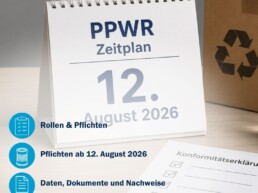
PPWR as of August 12, 2026:
Answers to the most important questions
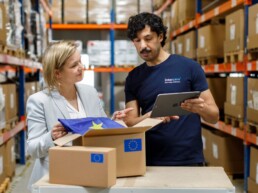
PPWR Explains:
Facts & Milestones of PPWR
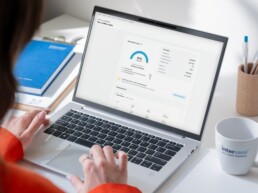
PPWR-compliant:
Declaration of Conformity Becomes Mandatory
About Interzero:
Interzero is one of the leading service providers in the field of closing product, material, and logistics loops, as well as an innovation leader in plastics recycling with the largest sorting capacity in Europe. Guided by the principle of “zero waste solutions,” the company supports over 80,000 customers across Europe in the responsible management of recyclable materials, thereby helping them improve their own sustainability performance and conserve primary resources. With approximately 2,000 employees, the company generates revenue of over one billion euros (2021). According to Fraunhofer UMSICHT, Interzero’s recycling activities saved 1.04 million metric tons of greenhouse gases and 8.09 million metric tons of primary raw materials in 2024 alone, compared to primary production. As a pioneer in the circular economy, Interzero is the recipient of the 2024 German Sustainability Award as well as the associated special prize in the “Resources” transformation category. For more information, visit www.interzero.at.
Find out more in our current brochure on ” resources SAVED by recycling “
Contact
Do you still have questions? We are here for you!

zerowaste@interzero.at
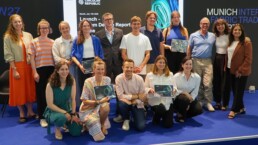
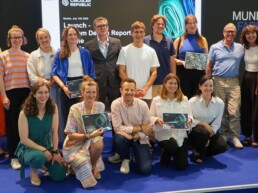
Textile EPR Is Coming: Interzero Is Contributing to the Development of Practical Systems
The Textile EPR is drawing nearer. In the future, manufacturers, importers, and retailers will be held more accountable for the entire life cycle of their textiles. To this end, EU member states must introduce mandatory extended producer responsibility systems by April 2028.
The situation in Austria also illustrates just how urgent the need for action is: In 2023, approximately 213,000 metric tons of textile waste … Only 24 percent of these were collected separately. As a result, a large portion of used textiles still does not enter suitable processes for reuse and high-quality Textile Recycling.
For us, therefore, the recent exchange as part of a multistakeholder process coordinated by CIRCULAR REPUBLIC marked an important starting point. More than 20 organizations from across the entire textile value chain worked together to determine the framework conditions required for an effective EPR system. Participants included companies and organizations from the fields of production, retail, collection, sorting, recycling, and material innovation.
Among other things, the focus was on clear, common standards, a competitively organized system, targeted research funding, and transparent goals for true textile-to-textile recycling. It will be crucial not only to define responsibility in formal terms, but also to coordinate collection, sorting, and recovery in such a way that a functioning Material Cycles may arise.
We are already working intensively on the upcoming expanded producer responsibility for textiles and bring our experience with EPR systems and the circular economy to the discussion. In upcoming issues of our Interzero Insights, we’ll keep you updated on further developments and the specific implications for companies in Austria.
Source of Austrian waste data: BMLUK, Waste Management 2025.
Latest News
PPWR as of August 12, 2026:
Our FAQs provide guidance on the next steps
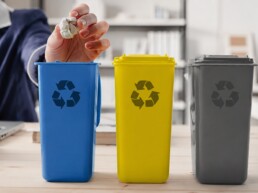
What happens to your license fees and Packaging after use?
Anyone who places packaging on the market in Austria is responsible for its collection and recycling.
Away from the Wasteful Society:
Why the Circular Economy Needs to Be Implemented Now
Reducing Food Waste:
Allianz Summit Highlights Approaches Along the Value Chain
About Interzero:
Interzero is one of the leading service providers in the field of closing product, material, and logistics loops, as well as an innovation leader in plastics recycling with the largest sorting capacity in Europe. Guided by the principle of “zero waste solutions,” the company supports over 80,000 customers across Europe in the responsible management of recyclable materials, thereby helping them improve their own sustainability performance and conserve primary resources. With approximately 2,000 employees, the company generates revenue of over one billion euros (2021). According to Fraunhofer UMSICHT, Interzero’s recycling activities saved 1.04 million metric tons of greenhouse gases and 8.09 million metric tons of primary raw materials in 2024 alone, compared to primary production. As a pioneer in the circular economy, Interzero is the recipient of the 2024 German Sustainability Award as well as the associated special prize in the “Resources” transformation category. For more information, visit www.interzero.at.
Find out more in our current brochure on ” resources SAVED by recycling “
Contact
Do you still have questions? We are here for you!
zerowaste@interzero.at
PPWR Starting August 12, 2026: Our FAQs Provide Guidance on the Next Steps
The PPWR will generally take effect on August 12, 2026. However, not all requirements will take effect at the same time. While certain provisions regarding Recyclability, while requirements regarding labeling or recycled content will take effect at a later date, the first specific requirements must be taken into account as early as August.
As a result, companies are currently facing primarily practical questions:
- Which packaging and packaging components are affected?
- What role do we play as producers, importers, distributors, or retailers?
- What are the rules for private label and contract bottling?
- Which packaging data do we need to obtain from our suppliers?
- What technical documentation and declaration of conformity are required?
- What happens to packaging that has already been produced or is in storage?
In our new PPWR FAQ, we’ve compiled the 30 most important questions from customer interactions, sales, and consulting, and provided clear answers to them.
The content is divided into four subject areas:
- Am I affected, and what role do I play?
- What do I need to do by or on August 12, 2026?
- What data, documents, and supporting evidence do I need?
- What will be the future requirements regarding recyclability, labeling, recycled materials, and EPR?
Since certain specific provisions are still being clarified through additional EU legislation and technical guidelines, we also clearly outline where clear guidelines already exist, where a case-by-case assessment is necessary, and which questions cannot yet be definitively answered.
This will give you a quick overview and a solid foundation for preparing the next steps for your company in a structured way.
Latest News
Textile EPR Is Coming:
Interzero is getting involved early on in the development of practical systems
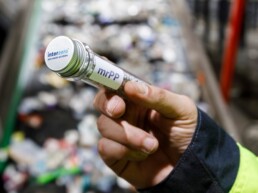
Food-Grade Recycled Materials from the Yellow Bag:
Interzero Opens Up New Possibilities for Packaging Recycling Loops
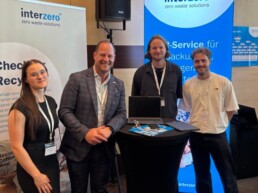
Future Resources 2026:
What the packaging industry Needs Now to Implement the PPWR
Reducing Food Waste:
Allianz Summit Highlights Approaches Along the Value Chain
About Interzero:
Interzero is one of the leading service providers in the field of closing product, material, and logistics loops, as well as an innovation leader in plastics recycling with the largest sorting capacity in Europe. Guided by the principle of “zero waste solutions,” the company supports over 80,000 customers across Europe in the responsible management of recyclable materials, thereby helping them improve their own sustainability performance and conserve primary resources. With approximately 2,000 employees, the company generates revenue of over one billion euros (2021). According to Fraunhofer UMSICHT, Interzero’s recycling activities saved 1.04 million metric tons of greenhouse gases and 8.09 million metric tons of primary raw materials in 2024 alone, compared to primary production. As a pioneer in the circular economy, Interzero is the recipient of the 2024 German Sustainability Award as well as the associated special prize in the “Resources” transformation category. For more information, visit www.interzero.at.
Find out more in our current brochure on ” resources SAVED by recycling “
Contact
Do you still have questions? We are here for you!
zerowaste@interzero.at
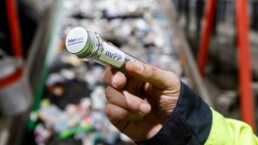
Food-Grade Recyclates from the Yellow Bag: Interzero Opens Up New Possibilities for Packaging Recycling Loops
Food-grade recycled materials from the yellow bag have long been considered a major challenge in plastics recycling. With a new recycling plant in Germany, we are now creating the conditions to produce high-quality recycled polypropylene for use in food packaging, thereby further closing material loops.
This development is of great importance to manufacturers, brand owners, and retailers. This is because packaging requirements are constantly increasing. The European PPWR, increasing requirements for the use of recycled materials and the expectations of customers and consumers are driving up the demand for high-quality recycled raw materials.
While food-grade recycled materials have already become established for PET, comparable solutions for polypropylene are still in their infancy. This is precisely where our investment comes in. The goal is to produce high-quality recycled materials from used packaging that can be reused for sensitive applications in the food industry.
This development opens up new opportunities for Austrian companies. The availability of high-quality recycled materials will play an important role in the future in order to Circular Economy Implementing the circular economy in practice, meeting regulatory requirements, and designing packaging to be sustainable in the long term.
With our international expertise in recycling and materials, we drive innovation throughout the entire value chain and lay the foundation for tomorrow’s high-quality material cycles.
Learn more about the new recycling plant and our investment in food-grade recycled materials.
Would you like to know how this development will affect your packaging, your recycling strategy, or the requirements of the PPWR …might have? Our experts will be happy to advise you zerowaste@interzero.at
Latest News
What happens to your license fees and Packaging after use?
Anyone who places packaging on the market in Austria is responsible for its collection and recycling.
Future Resources 2026:
What the packaging industry needs now to implement the PPWR
Away from the Wasteful Society:
Why the Circular Economy Needs to Be Implemented Now
Reducing Food Waste:
Allianz Summit Highlights Approaches Along the Value Chain
About Interzero:
Interzero is one of the leading service providers in the field of closing product, material, and logistics loops, as well as an innovation leader in plastics recycling with the largest sorting capacity in Europe. Guided by the principle of “zero waste solutions,” the company supports over 80,000 customers across Europe in the responsible management of recyclable materials, thereby helping them improve their own sustainability performance and conserve primary resources. With approximately 2,000 employees, the company generates revenue of over one billion euros (2021). According to Fraunhofer UMSICHT, Interzero’s recycling activities saved 1.04 million metric tons of greenhouse gases and 8.09 million metric tons of primary raw materials in 2024 alone, compared to primary production. As a pioneer in the circular economy, Interzero is the recipient of the 2024 German Sustainability Award as well as the associated special prize in the “Resources” transformation category. For more information, visit www.interzero.at.
Find out more in our current brochure on ” resources SAVED by recycling “
Contact
Do you still have questions? We are here for you!
zerowaste@interzero.at
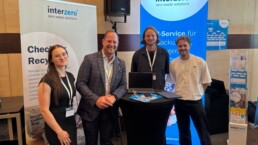
Future Resources 2026: What the Packaging Industry Needs Now to Implement the PPWR
On June 17, the 10th edition of Future Resources took place in Cologne. The conference has established itself as an important industry gathering for sustainable packaging solutions and was organized again this year by Interzero in collaboration with the packaging journal.
The focus was on the big questions currently on the minds of many companies: What does the new PPWR Specifically for packaging? What requirements apply to distributors, retailers, logistics providers, and brand companies? And how can Recyclability, the use of recycled materials, and credible sustainability claims in practice?
The program provided expert analysis and concrete practical perspectives on these topics. Futurist Tristan Horx, in his keynote address “Future Reloaded,” offered insights into trends, countertrends, and the willingness to embrace change. Dr. Markus W. Pauly provided insights into the VerpackDG and was available afterward for a PPWR consultation session. Franziska Safak from the Central Agency for Packaging Register outlined the current status of the PPWR and the declaration of conformity.
Practical aspects were also well represented: presentations on certified recycled content, credible recycled content claims, packaging in 2030, and best practices from the packaging and branded goods industries demonstrated just how closely regulation, material decisions, and implementation are now intertwined.
Future Resources is also relevant to Interzero Austria because many of the topics discussed directly affect Austrian companies—particularly with regard to packaging data, recycling solutions, the circular economy and preparation for upcoming regulatory requirements.
The event demonstrated once again that guidance, knowledge sharing, and practical implementation support are becoming increasingly important for companies. Those who address the new requirements early on can develop their packaging more strategically and make better use of their room for maneuver.
📅 The next event will take place on June 16, 2027, in Cologne. It’s a must-attend for anyone interested in PPWR, packaging design, recycled materials, and circular solutions.
Latest News
Food-Grade Recycled Materials from the Yellow Bag:
Interzero Opens Up New Possibilities for Packaging Recycling Loops
What happens to your license fees and Packaging after use?
Anyone who places packaging on the market in Austria is responsible for its collection and recycling.
Away from the Wasteful Society:
Why the Circular Economy Needs to Be Implemented Now
Reducing Food Waste:
Allianz Summit Highlights Approaches Along the Value Chain
About Interzero:
Interzero is one of the leading service providers in the field of closing product, material, and logistics loops, as well as an innovation leader in plastics recycling with the largest sorting capacity in Europe. Guided by the principle of “zero waste solutions,” the company supports over 80,000 customers across Europe in the responsible management of recyclable materials, thereby helping them improve their own sustainability performance and conserve primary resources. With approximately 2,000 employees, the company generates revenue of over one billion euros (2021). According to Fraunhofer UMSICHT, Interzero’s recycling activities saved 1.04 million metric tons of greenhouse gases and 8.09 million metric tons of primary raw materials in 2024 alone, compared to primary production. As a pioneer in the circular economy, Interzero is the recipient of the 2024 German Sustainability Award as well as the associated special prize in the “Resources” transformation category. For more information, visit www.interzero.at.
Find out more in our current brochure on ” resources SAVED by recycling “
Contact
Do you still have questions? We are here for you!
zerowaste@interzero.at
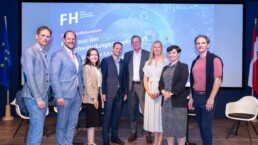
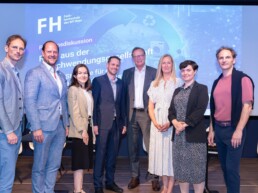
Away from the Wasteful Society: Why the Circular Economy Needs to Be Implemented Now
How can we successfully transition from a wasteful society to a functioning circular economy? This question was the focus of the panel discussion “Moving Away from a Wasteful Society: Europe’s Strategy for an Effective Circular Economy” at the BFI University of Applied Sciences in Vienna.
Together with representatives from academia, EU policy circles, environmental organizations, and the business community, Thomas Glatz, speaking on behalf of Interzero Austria, discussed the framework conditions companies need to ensure that the circular economy is not merely stated as a goal but is effectively implemented in practice.
The discussion centered on several key topics: clear and reliable regulatory guidelines, investment security, innovation, fair competition, and the question of how used products and Packaging can be transformed back into high-quality raw materials. After all, the circular economy has long been more than just an environmental issue. It is also a key factor for security of supply, competitiveness, and regional development in Europe.
One thing became clear: The direction has been set; now it’s all about implementation. Effective material cycles do not result from individual measures, but rather from the interplay of product design, collection, sorting, recovery, technology, and demand for recycled materials. This requires companies that invest, policies that create practical framework conditions, and markets that actually use secondary raw materials.
For Interzero, this dialogue is particularly relevant because we put the circular economy into practice every day—from recycling solutions to waste management to the return of recyclable materials into new material cycles.
👉 You can find more details about the event on LinkedIn: https://www.linkedin.com/feed/update/urn:li:activity:7472634828555927552
Latest News
Food-Grade Recycled Materials from the Yellow Bag:
Interzero Opens Up New Possibilities for Packaging Recycling Loops
What happens to your license fees and Packaging after use?
Anyone who places packaging on the market in Austria is responsible for its collection and recycling.
Future Resources 2026:
What the packaging industry Needs Now to Implement the PPWR
Reducing Food Waste:
Allianz Summit Highlights Approaches Along the Value Chain
About Interzero:
Interzero is one of the leading service providers in the field of closing product, material, and logistics loops, as well as an innovation leader in plastics recycling with the largest sorting capacity in Europe. Guided by the principle of “zero waste solutions,” the company supports over 80,000 customers across Europe in the responsible management of recyclable materials, thereby helping them improve their own sustainability performance and conserve primary resources. With approximately 2,000 employees, the company generates revenue of over one billion euros (2021). According to Fraunhofer UMSICHT, Interzero’s recycling activities saved 1.04 million metric tons of greenhouse gases and 8.09 million metric tons of primary raw materials in 2024 alone, compared to primary production. As a pioneer in the circular economy, Interzero is the recipient of the 2024 German Sustainability Award as well as the associated special prize in the “Resources” transformation category. For more information, visit www.interzero.at.
Find out more in our current brochure on ” resources SAVED by recycling “
Contact
Do you still have questions? We are here for you!
zerowaste@interzero.at
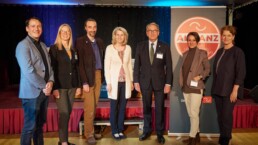
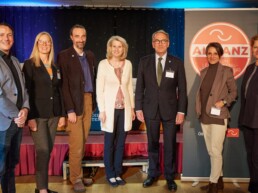
Reducing Food Waste: Allianz Summit Highlights Approaches Along the Value Chain
Food waste is an environmental, social, and economic challenge all at once. This is precisely where the Alliance Against Food Waste and Poverty comes in—an initiative we at Interzero have joined.
Initiated by Die Tafel Österreich, the alliance brings together organizations from the business, agricultural, retail, and logistics sectors, as well as cities, municipalities, and the social sector. The goal is to reduce food waste while simultaneously tackling food insecurity in a targeted manner.
At the first Allianz Summit in Vienna in May, it became clear just how important this shared approach is. Among other things, participants discussed issues related to food waste prevention and redistribution to charitable organizations, Sustainability, Circular Economy, agriculture, production, trade, institutional food service, and consumer behavior.
The summit also showed that effective solutions emerge when different stakeholders along the entire value chain work together. It is not about individual measures, but rather about better coordination between prevention, sharing, logistics, awareness-raising, and structural frameworks.
For us, our involvement in the alliance is a clear commitment to the responsible use of resources. Because Resource Conservation doesn’t start with recycling, but rather where food, materials, and existing structures are used as sensibly as possible.
(Photo credit: Thomas Topf)
For more information on the first Allianz Summit and the latest developments, see the follow-up report from Tafel Österreich.
Latest News
Food-Grade Recycled Materials from the Yellow Bag:
Interzero Opens Up New Possibilities for Packaging Recycling Loops
What happens to your license fees and Packaging after use?
Anyone who places packaging on the market in Austria is responsible for its collection and recycling.
Future Resources 2026:
What the packaging industry needs now to implement the PPWR
Away from the Wasteful Society:
Why the Circular Economy Needs to Be Implemented Now
About Interzero:
Interzero is one of the leading service providers in the field of closing product, material, and logistics loops, as well as an innovation leader in plastics recycling with the largest sorting capacity in Europe. Guided by the principle of “zero waste solutions,” the company supports over 80,000 customers across Europe in the responsible management of recyclable materials, thereby helping them improve their own sustainability performance and conserve primary resources. With approximately 2,000 employees, the company generates revenue of over one billion euros (2021). According to Fraunhofer UMSICHT, Interzero’s recycling activities saved 1.04 million metric tons of greenhouse gases and 8.09 million metric tons of primary raw materials in 2024 alone, compared to primary production. As a pioneer in the circular economy, Interzero is the recipient of the 2024 German Sustainability Award as well as the associated special prize in the “Resources” transformation category. For more information, visit www.interzero.at.
Find out more in our current brochure on ” resources SAVED by recycling “
Contact
Do you still have questions? We are here for you!
zerowaste@interzero.at
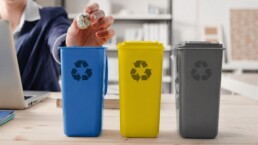
What happens to your license fees and your Packaging after use?
But what actually happens to these materials? And what happens to packaging after consumers dispose of it in the yellow bag or bin, the glass or paper recycling container, or at the recycling center?
Many companies are aware of their legal obligations regarding Packaging. However, the processes behind collection, sorting, and recycling rarely receive much attention. Yet it is precisely this system that forms the foundation for a functioning circular economy in Austria.
From Licensing to the Circular Economy
The so-called Extended Producer Responsibility (EPR) requires companies to take responsibility for the entire life cycle of the packaging they place on the market, particularly with regard to collection and recycling.
In practice, companies join a collection and recycling system and pay licensing fees for this service. The amount is based, among other factors, on the type of material and the quantity of packaging placed on the market.
These funds are used to organize and finance the collection, sorting, and recycling of packaging waste, as well as for other areas such as public relations and the promotion of waste prevention. The goal is to meet statutory recycling and recovery rates and to return recyclable materials to the cycle as efficiently as possible.
The Journey of Your Packaging
Once packaging has been used, it begins its journey back into the recycling cycle:
1. Separate Collection
Packaging is collected separately in yellow bags or yellow bins, as well as in glass or paper recycling containers.
2. Transportation and Sorting
The separately collected packaging is transported to sorting facilities and sorted by material type and quality.
3. Utilization
Recyclable materials are processed and reintroduced into production processes as secondary raw materials. Non-recyclable components are used for energy recovery.
4. Return to the cycle
The raw materials recovered are used to create new products and Packaging. This helps conserve primary raw materials and keeps resources in circulation.
Who is organizing the collection?
A clearly defined system is needed to ensure that packaging can be collected and recycled throughout Austria.
Approved collection and recycling systems assume organizational responsibility for the volumes of packaging allocated to them. They coordinate operations, finance services, and ensure compliance with legal requirements.
For household waste collection, collection and recycling systems are assigned collection regions every five years through a lottery based on their market shares, as part of a legally regulated procedure.
However, the systems do not carry out the collection themselves. Instead, they issue calls for bids for the necessary collection services and contract qualified collection and disposal companies to carry out the work.
The collection and recycling systems are currently preparing for the bidding period covering the service period from 2028 to 2032. This will ensure that collection can continue to be organized comprehensively, efficiently, and in accordance with legal requirements.
Why the system will become even more important in the future
With the new EU Packaging Regulation (PPWR), requirements for recyclability, resource efficiency, and the circular economy are continuing to rise.
For companies, this means that in the future they will need to take an even more comprehensive view of packaging throughout its entire life cycle—from development through use to collection and recycling.
Effective collection and recycling systems provide the necessary foundation for this and ensure that used packaging can be turned back into valuable raw materials.
Latest News
Food-Grade Recycled Materials from the Yellow Bag:
Interzero Opens Up New Possibilities for Packaging Recycling Loops
Future Resources 2026:
What the packaging industry needs now to implement the PPWR
Away from the Wasteful Society:
Why the Circular Economy Needs to Be Implemented Now
Reducing Food Waste:
Allianz Summit Highlights Approaches Along the Value Chain
About Interzero:
Interzero is one of the leading service providers in the field of closing product, material, and logistics loops, as well as an innovation leader in plastics recycling with the largest sorting capacity in Europe. Guided by the principle of “zero waste solutions,” the company supports over 80,000 customers across Europe in the responsible management of recyclable materials, thereby helping them improve their own sustainability performance and conserve primary resources. With approximately 2,000 employees, the company generates revenue of over one billion euros (2021). According to Fraunhofer UMSICHT, Interzero’s recycling activities saved 1.04 million metric tons of greenhouse gases and 8.09 million metric tons of primary raw materials in 2024 alone, compared to primary production. As a pioneer in the circular economy, Interzero is the recipient of the 2024 German Sustainability Award as well as the associated special prize in the “Resources” transformation category. For more information, visit www.interzero.at.
Find out more in our current brochure on ” resources SAVED by recycling “
Contact
Do you still have questions? We are here for you!
zerowaste@interzero.at
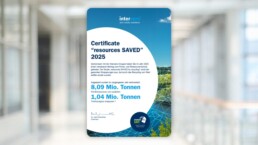
"resources SAVED" certificates: Scientifically proven sustainability performance
For companies, sustainability measures are increasingly becoming a question of verifiable impact. This is precisely where the “resources SAVED” certificates from Interzero.
The certificates make visible the concrete contribution that companies make together with Interzero to the circular economy and to climate and resource protection. The basis for this is the study “resources SAVED by recycling”which Interzero has been carrying out together with the Fraunhofer UMSICHT Institute for 18 years now.
The scientific life cycle assessment makes it clear how many primary resources and greenhouse gas emissions are actually saved through recycling. This is based on real material flow data, recycling volumes, transport distances and energy consumption from practical collaboration with our customers.
The jointly achieved contributions to circular economy, recycling and resource conservation are annually recognized by individual “resources SAVED” certificates scientifically documented.
For many companies today, this evidence is a valuable component of sustainability and ESG communication. This is because it is increasingly no longer enough to simply describe sustainability measures; comprehensible data and concrete impact are required.
The calculations are based on the internationally recognized Life Cycle Assessment (LCA) method. The scientists compare all process steps of primary raw material extraction with those of recycling. The results clearly show: Recycling solutions make a measurable contribution to climate and resource protection.
In addition, we support our customers with supplementary communication materials and graphics to make this environmental performance transparent to customers, partners and stakeholders.
More about the “resources SAVED” certificates and the scientific calculation methodology in the latest blog post.
Latest News
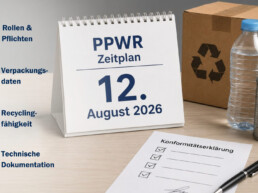
PPWR Declaration of Conformity:
Obligations from August 2026
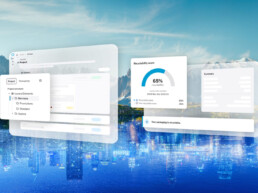
Check4Recycling:
Digitally evaluate and prepare packaging in a structured way
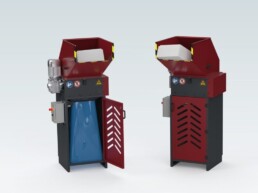
T-REX 550 GENIUS EPS:
Efficiently shredding bulky EPS packaging and significantly reducing costs
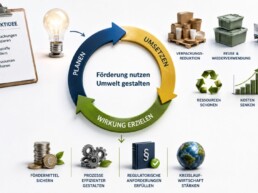
Promoting waste prevention:
Why now is the right time for concrete projects
About Interzero:
Interzero is one of the leading service providers for closing product, material and logistics loops and an innovation leader in plastics recycling with the largest sorting capacity in Europe. Under the guiding principle of “zero waste solutions”, the company supports over 80,000 customers across Europe in the responsible handling of recyclable materials, helping them to improve their own sustainability performance and conserve primary resources. With around 2,000 employees, the company generates a turnover of over one billion euros (2021). According to Fraunhofer UMSICHT, Interzero’s recycling activities saved 1.04 million tons of greenhouse gases and 8.09 million tons of primary raw materials compared to primary production in 2024 alone. As a pioneer for the circular economy, Interzero is the winner of the German Sustainability Award 2024 and the corresponding special prize in the transformation field “Resources”. Further information can be found at www.interzero.at .
Find out more in our current brochure on ” resources SAVED by recycling “
Contact
Do you still have questions? We are here for you!