The Textile EPR is drawing nearer. In the future, manufacturers, importers, and retailers will be held more accountable for the entire life cycle of their textiles. To this end, EU member states must introduce mandatory extended producer responsibility systems by April 2028.
The situation in Austria also illustrates just how urgent the need for action is: In 2023, approximately 213,000 metric tons of textile waste … Only 24 percent of these were collected separately. As a result, a large portion of used textiles still does not enter suitable processes for reuse and high-quality Textile Recycling.
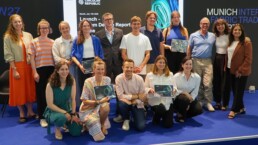
For us, therefore, the recent exchange as part of a multistakeholder process coordinated by CIRCULAR REPUBLIC marked an important starting point. More than 20 organizations from across the entire textile value chain worked together to determine the framework conditions required for an effective EPR system. Participants included companies and organizations from the fields of production, retail, collection, sorting, recycling, and material innovation.
Among other things, the focus was on clear, common standards, a competitively organized system, targeted research funding, and transparent goals for true textile-to-textile recycling. It will be crucial not only to define responsibility in formal terms, but also to coordinate collection, sorting, and recovery in such a way that a functioning Material Cycles may arise.
We are already working intensively on the upcoming expanded producer responsibility for textiles and bring our experience with EPR systems and the circular economy to the discussion. In upcoming issues of our Interzero Insights, we’ll keep you updated on further developments and the specific implications for companies in Austria.
Source of Austrian waste data: BMLUK, Waste Management 2025.
Latest News
PPWR as of August 12, 2026:
Our FAQs provide guidance on the next steps
What happens to your license fees and Packaging after use?
Anyone who places packaging on the market in Austria is responsible for its collection and recycling.
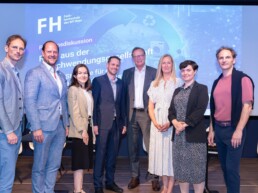
Away from the Wasteful Society:
Why the Circular Economy Needs to Be Implemented Now
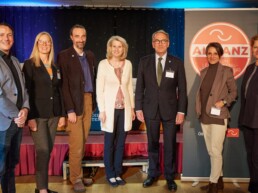
Reducing Food Waste:
Allianz Summit Highlights Approaches Along the Value Chain
About Interzero:
Interzero is one of the leading service providers in the field of closing product, material, and logistics loops, as well as an innovation leader in plastics recycling with the largest sorting capacity in Europe. Guided by the principle of “zero waste solutions,” the company supports over 80,000 customers across Europe in the responsible management of recyclable materials, thereby helping them improve their own sustainability performance and conserve primary resources. With approximately 2,000 employees, the company generates revenue of over one billion euros (2021). According to Fraunhofer UMSICHT, Interzero’s recycling activities saved 1.04 million metric tons of greenhouse gases and 8.09 million metric tons of primary raw materials in 2024 alone, compared to primary production. As a pioneer in the circular economy, Interzero is the recipient of the 2024 German Sustainability Award as well as the associated special prize in the “Resources” transformation category. For more information, visit www.interzero.at.
Find out more in our current brochure on ” resources SAVED by recycling “
Contact
Do you still have questions? We are here for you!