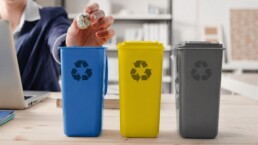
But what actually happens to these materials? And what happens to packaging after consumers dispose of it in the yellow bag or bin, the glass or paper recycling container, or at the recycling center?
Many companies are aware of their legal obligations regarding Packaging. However, the processes behind collection, sorting, and recycling rarely receive much attention. Yet it is precisely this system that forms the foundation for a functioning circular economy in Austria.
From Licensing to the Circular Economy
The so-called Extended Producer Responsibility (EPR) requires companies to take responsibility for the entire life cycle of the packaging they place on the market, particularly with regard to collection and recycling.
In practice, companies join a collection and recycling system and pay licensing fees for this service. The amount is based, among other factors, on the type of material and the quantity of packaging placed on the market.
These funds are used to organize and finance the collection, sorting, and recycling of packaging waste, as well as for other areas such as public relations and the promotion of waste prevention. The goal is to meet statutory recycling and recovery rates and to return recyclable materials to the cycle as efficiently as possible.
The Journey of Your Packaging
Once packaging has been used, it begins its journey back into the recycling cycle:
1. Separate Collection
Packaging is collected separately in yellow bags or yellow bins, as well as in glass or paper recycling containers.
2. Transportation and Sorting
The separately collected packaging is transported to sorting facilities and sorted by material type and quality.
3. Utilization
Recyclable materials are processed and reintroduced into production processes as secondary raw materials. Non-recyclable components are used for energy recovery.
4. Return to the cycle
The raw materials recovered are used to create new products and Packaging. This helps conserve primary raw materials and keeps resources in circulation.
Who is organizing the collection?
A clearly defined system is needed to ensure that packaging can be collected and recycled throughout Austria.
Approved collection and recycling systems assume organizational responsibility for the volumes of packaging allocated to them. They coordinate operations, finance services, and ensure compliance with legal requirements.
For household waste collection, collection and recycling systems are assigned collection regions every five years through a lottery based on their market shares, as part of a legally regulated procedure.
However, the systems do not carry out the collection themselves. Instead, they issue calls for bids for the necessary collection services and contract qualified collection and disposal companies to carry out the work.
The collection and recycling systems are currently preparing for the bidding period covering the service period from 2028 to 2032. This will ensure that collection can continue to be organized comprehensively, efficiently, and in accordance with legal requirements.
Why the system will become even more important in the future
With the new EU Packaging Regulation (PPWR), requirements for recyclability, resource efficiency, and the circular economy are continuing to rise.
For companies, this means that in the future they will need to take an even more comprehensive view of packaging throughout its entire life cycle—from development through use to collection and recycling.
Effective collection and recycling systems provide the necessary foundation for this and ensure that used packaging can be turned back into valuable raw materials.
Latest News
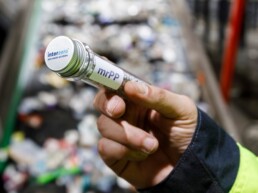
Food-Grade Recycled Materials from the Yellow Bag:
Interzero Opens Up New Possibilities for Packaging Recycling Loops
Future Resources 2026:
What the packaging industry needs now to implement the PPWR
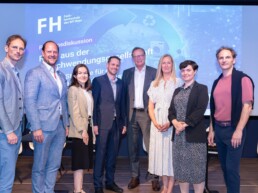
Away from the Wasteful Society:
Why the Circular Economy Needs to Be Implemented Now
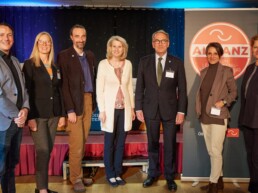
Reducing Food Waste:
Allianz Summit Highlights Approaches Along the Value Chain
About Interzero:
Interzero is one of the leading service providers in the field of closing product, material, and logistics loops, as well as an innovation leader in plastics recycling with the largest sorting capacity in Europe. Guided by the principle of “zero waste solutions,” the company supports over 80,000 customers across Europe in the responsible management of recyclable materials, thereby helping them improve their own sustainability performance and conserve primary resources. With approximately 2,000 employees, the company generates revenue of over one billion euros (2021). According to Fraunhofer UMSICHT, Interzero’s recycling activities saved 1.04 million metric tons of greenhouse gases and 8.09 million metric tons of primary raw materials in 2024 alone, compared to primary production. As a pioneer in the circular economy, Interzero is the recipient of the 2024 German Sustainability Award as well as the associated special prize in the “Resources” transformation category. For more information, visit www.interzero.at.
Find out more in our current brochure on ” resources SAVED by recycling “
Contact
Do you still have questions? We are here for you!