The circular economy is gaining in importance: regulatory requirements vs. practice
The Austrian Sustainability Summit 2026 was fully booked and once again demonstrated the growing importance of the circular economy and resource issues. As part of the summit, the Circular Economy Stream as an independent conference format provides space for in-depth discussions and concrete solutions along the entire value chain.
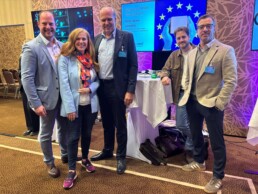
We were there with the panel “With barrier papers to PPWR conformity and low EPR fees” and deliberately opted for a practice-oriented approach.
The focus was on the question of how companies can translate increasing regulatory requirements – particularly as a result of the PPWR – into concrete solutions at an early stage. This is because it has become clear with the entry into force of the first regulations, for example on “Substances in Packaging” (e.g. PFAS in accordance with Article 5): The debate about recyclability and material selection cannot be delayed.
Our colleague Dominik Lichtenthäler, Sales Engineer in the Made for Recycling division, showed that Packaging can already be optimized in line with national and international standards. What is still considered a “nice to have” in many places is increasingly becoming an economic factor: packaging design, material selection and regulatory requirements are converging and becoming a lever for cost optimization, especially with regard to future eco-fee modulation as part of Extended Producer Responsibility (EPR).
Together with Herwig Kirchberger, Managing Director of DELSCI GmbH, we used specific examples of innovative barrier papers to show how functional requirements, recyclability and regulatory compliance can be combined. At the same time, this is already opening up potential for reducing EPR fees.
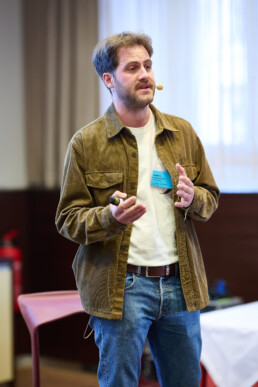
Thomas Glatz, Managing Director Interzero Austria, comments:
The Circular Economy Stream has clearly shown how strong the need is for concrete, practicable solutions. Especially when it comes to topics such as PPWR and recyclability, it is no longer about theory, but about how companies can implement these requirements in practice in an economically viable way.”
The intensive exchange in the panel and the numerous discussions at our Meeting Point confirmed this: Companies are looking for concrete guidance to not only fulfill regulatory requirements, but to actively use them for their own transformation.
You can find more impressions and insights from the Austrian Sustainability Summit HERE
Latest News

Need for action PPWR:
Legal gray areas slow down implementation
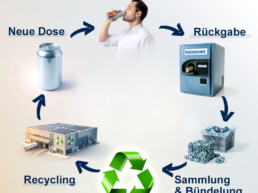
From deposit to new can:
Aluminum in the cycle
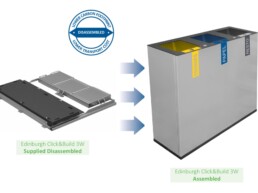
Recycling station rethought:
Less transport volume, more efficiency
About Interzero:
Interzero is one of the leading service providers for closing product, material and logistics loops and an innovation leader in plastics recycling with the largest sorting capacity in Europe. Under the guiding principle of “zero waste solutions”, the company supports over 80,000 customers across Europe in the responsible handling of recyclable materials, helping them to improve their own sustainability performance and conserve primary resources. With around 2,000 employees, the company generates a turnover of over one billion euros (2021). According to Fraunhofer UMSICHT, Interzero’s recycling activities saved 1.04 million tons of greenhouse gases and 8.09 million tons of primary raw materials compared to primary production in 2024 alone. As a pioneer for the circular economy, Interzero is the winner of the German Sustainability Award 2024 and the corresponding special prize in the transformation field “Resources”. Further information can be found at www.interzero.at .
Find out more in our current brochure on ” resources SAVED by recycling “
Contact
You still have questions? We are here for you!