
The extended producer responsibility (EPR) and the new EU packaging regulation (PPWR) will bring far-reaching changes for companies that place packaging on the market. After the PPWR comes into force at the beginning of 2025, companies will have to deal with stricter requirements for Packaging Those who do not deal with the new regulations in a timely manner risk not only higher license fees, but also additional bureaucratic hurdles and possible sanctions.
PPWR: Packaging, Packaging Waste Regulation – from the Directive to the EU Packaging Regulation
The Packaging and Packaging Waste Ordinance (PPWR) will be valid throughout the EU from 2025. PPWR and EPR together are transforming the packaging industry.
Your goal is:
- reduce resource consumption and packaging waste,
- to promote the circular economy and
- reduce the negative environmental impact of Packaging.
In order to implement these objectives in a measurable manner, the PPWR introduces specific measures:
- Minimum requirements on the recyclability of Packaging
- labeling requirements for packaging materials
- Use of authorized representatives for companies not based in the respective EU country
- declarations of conformity to demonstrate recyclability
Among other things, the new requirements mean for Packaging:
- Recyclability is mandatory
- A minimum proportion of post-consumer recyclate (PCR) must be included
- Certain weight limits must be observed
- Labelling requirements for materials will apply across the EU in the future
- Reusability is promoted
Extended producer responsibility – briefly explained
Companies that place products on the market in the EU are responsible for their entire life cycle : This applies not only to the products themselves, but also to packaging and other components that are disposed of by end consumers. The Extended Producer Responsibility (EPR) requires companies to ensure take-back and recycling solutions.
In Austria, this currently affects three mandatory areas: Packaging, waste electrical equipment and batteries. With a view to future developments, however, the Textile recycling is becoming increasingly relevant.
Packaging is not the only area affected – EPR for textiles
Extended producer responsibility is increasingly affecting textiles. Countries such as France, the Netherlands and Sweden have already introduced EPR obligations. Austria is also preparing for new regulations.
The challenges of textile recycling lie in the diversity of materials – but innovative approaches show what a circular solution can look like.
Ecomodulation: Financial benefits for sustainable Packaging
With the PPWR, the principle of eco-modulation gains importance. Recyclable packaging is rewarded with lower license fees, while non-recyclable packaging incurs higher costs.
What does this mean for your company?
The sooner you optimize your Packaging, the more you benefit from lower license fees. The transition to sustainable Packaging can take months – Therefore, start early with an analysis and optimization!
Find out more about how Interzero can support you in implementing the PPWR!
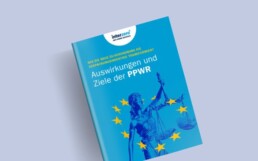
PPWR Whitepaper for download:
Interzero supports companies in the transformation necessary to implement the obligations of the PPWR on time. Get detailed information and recommendations for action on PPWR and EPR in our white paper.
Please fill out the form to access the white paper:
Do you have questions about the white paper or the topic of “PPWR”? Do you need help with your specific problem?
Write to us at the email address below and we will be happy to help you!

marketing@interzero.at
Latest News
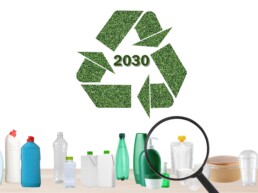
Free recycling test:
Packaging on the test bench
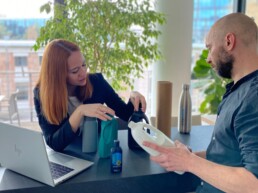
Packaging for startups:
Sustainable, legal, cost-efficient
Future prospects for recycling:
IMH Smart Packaging
About Interzero:
Interzero is one of the leading service providers for closing product, material and logistics cycles and an innovation leader in plastics recycling with the largest sorting capacity in Europe. Under the guiding principle of “zero waste solutions”, the company supports over 50,000 customers across Europe in the responsible handling of recyclable materials, helping them to improve their own sustainability performance and conserve primary resources. With around 2,000 employees, the company generates sales of over one billion euros (2021). According to Fraunhofer UMSICHT, Interzero’s recycling activities saved 1.2 million tons of greenhouse gases and 11.1 million tons of primary raw materials compared to primary production in 2023 alone. As a pioneer of the circular economy, Interzero is the winner of the German Sustainability Award 2024 and the associated special prize in the transformation field of “resources”. Further information can be found at www.interzero.at .
Find out more in our current brochure on ” resources SAVED by recycling “
Contact
You still have questions? We are here for you!