Waste Management Along the Automotive Value Chain
Complex components, production waste, and parts from service and recall campaigns often require customized recycling, logistics, and recovery solutions. Discover Interzero’s field-proven services for the automotive industry—developed through successfully implemented customer projects and tested at production facilities, dealerships, and service networks.
From the plant to the service network: Safely managing complex waste streams
large volumes and a wide variety of waste streams,
time-consuming coordination of waste logistics, including various waste fractions and hazardous waste,
Pressure to close material loops and reuse materials,
difficult processing of complex materials such as composites and mixed plastics,
increasing regulatory requirements for circularity, recycling, and the use of recycled materials in vehicles,
Ensuring consistent waste management processes across workshop, dealer, and service networks.
Handling components that have failed quality control or originate from service campaigns and recalls,
EPR obligations for packaging, batteries, and electrical and electronic equipment, as well as new EU requirements regarding extended producer responsibility for end-of-life vehicles,
When Standard Methods Aren't Enough: Recycling Complex Automotive Waste
Automotive companies generate a wide variety of waste streams, and managing them is not always easy. Complex materials, defective components, waste from service and recall campaigns, as well as production waste and residues, require different technologies, logistics models, and recycling pathways.
Based on our experience in waste management in the automotive industry, we have identified waste streams with particular potential for recycling and reuse, as well as processes with potential for economic and operational optimization. This has led to the development of field-proven service models for the automotive industry.
We integrate the respective service into the company’s existing waste management processes and tailor the scope to production volumes, site organization, and local conditions. The transition is planned in such a way as to minimize any potential disruptions to production, waste logistics, and warehouse operations. Since the underlying processes have already been tested, implementation can be carried out more efficiently than if recycling and logistics routes had to be developed from scratch.
The models are based on proven technologies, optimized logistics, and experience gained from completed projects in the automotive industry. Documented results from individual customer projects include several hundred metric tons of additional production waste recycled, thousands of components inspected during service campaigns, and significantly reduced disposal costs for selected waste types.
Separating Complex Components and Recovering Materials
Automakers frequently use components made from different materials and polymer blends. While these components are durable and functional, they are often difficult to process using conventional recycling methods.
Interzero has developed specialized processing and separation processes for such challenging waste streams. These can be used, for example, for defective batches and production waste in which different plastics are bonded to metals or electronic components.
The service combines the necessary processing with logistics: pickup at the production site, shredding and separation of the materials, and forwarding the recovered fractions to suitable recycling facilities. Coordinating the entire process reduces the burden on the customer and can enable higher recycling rates and more cost-effective recovery pathways.
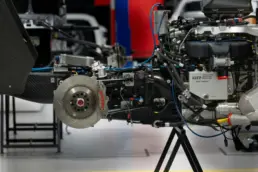
More than 300 metric tons of complex industrial waste were sent for recycling
Initial Situation:
An automotive parts manufacturer was looking for a suitable recycling method for production waste from vehicle lighting components. Metals and electronic components were firmly bonded to various plastics, making it difficult to separate and recycle the defective components using conventional methods.
Our Solution:
Interzero integrated the waste stream into the production site’s existing waste management system and forwarded the mixed plastic components to a specialized recycling facility. There, plastics, metals, and electronic components were separated and subsequently sent to appropriate recycling channels.
Result:
The manufacturer was able to reduce disposal costs for this waste stream and minimize internal coordination efforts. Within eight months, more than 300 metric tons of defective components and production waste were sent for further recycling.
How the Solution Benefits Manufacturers
- Cost Reduction
Appropriate separation and recovery processes can reduce the costs associated with waste streams that are difficult to recover. - Higher Material Recovery
Separated materials can be fed into appropriate recycling and recovery processes. - Simpler Waste Management
Fewer points of contact and centralized coordination by Interzero reduce the organizational burden on the customer.
Other Environmental Services for the Automotive Industry
management of all types of post-production, workshop, and process waste
Ongoing environmental consulting
Consulting on the Packaging Waste Directive (PPWR), including packaging audits
Developing customized waste management solutions for the automotive industry
fulfillment of EPR obligations in 31 European markets (EU-27, the United Kingdom, Norway, Serbia, and Switzerland),
selection and servicing of balers and other waste compaction equipment
Environmental audit of a production facility
FAQ
How can we find new ways to recycle waste from automotive parts manufacturing?
Interzero can centrally coordinate pickups. The appropriate model is determined in collaboration with the customer—for example, fixed pickup dates, on-demand service, or a combination of both.
Digital solutions can further support the ordering, coordination, and documentation of pickups. Which specific systems can be used in Austria is determined based on the individual customer project.
Employees at the sites are primarily responsible for requesting or preparing for pickup and properly staging the waste. Interzero coordinates the remaining steps with the participating transportation and recycling partners.
Interzero organizes the collection and recycling of a wide variety of production, process, and workshop waste from the automotive industry. Depending on the location and requirements, this includes, for example, defective product batches, scrap parts, tires, batteries, rechargeable batteries, used oil, and hazardous waste.
For hazardous goods or hazardous waste, the applicable transportation, reporting, and documentation requirements are taken into account.
This requires knowledge of secondary raw material markets, suitable processing technologies, and potential applications for recovered materials.
Interzero combines expertise in waste management, recycling, logistics, and regulatory requirements. The process involves assessing whether an existing waste stream can be processed—both technically and economically—in a way that allows the material to be reused in another production process.
This enables waste generators and suitable buyers of secondary raw materials to be brought together, paving the way for the development of new material cycles.
The company’s legal responsibility generally remains in place. However, many operational tasks can be outsourced to a specialized service provider—such as coordinating pickups, working with recycling partners, documentation, data preparation, support during audits, and ongoing environmental consulting.
This allows the customer to benefit from a single point of contact and clearly coordinated processes.
Waste management costs can be reduced, for example , through more appropriate recycling methods, better material separation, optimized collection schedules, the bundling of services, and the use of valuable secondary raw materials.
When it comes to EPR obligations, systems, rates, and requirements vary by market. For companies operating internationally , coordinated support across multiple countries can therefore provide administrative benefits and greater transparency regarding costs and obligations.
Interzero supports companies with EPR obligations in various European markets as well as with projects to optimize packaging and reusable systems.
Interzero provides support in organizing waste management processes, documentation, and reporting to ensure that operational, regulatory, and relevant OEM and certification requirements are met.
Traceable processes and structured documentation make it easier to prepare for audits by customers, regulatory agencies, and certification bodies.
The transition is planned to maintain continuity in collection, documentation, and ongoing environmental processes as much as possible.
This includes an analysis of the existing model, a clear implementation and handover plan, and clearly defined responsibilities. The goal is to minimize the necessary involvement of the client team while ensuring a controlled transition.
We also serve other industries
Contact
Do you have any questions? We're here to help!

Benedikt Angerer
Key Account Manager, Waste Management